I Tested 5 GW1 Plans: One Survived 2026
The best FPL Gameweek 1 strategy for 2026/27 is not simply selecting the most expensive players; it is building a flexible squad around reliable minutes, strong opening fixtures, and one clear captain...

I Tested 5 GW1 Plans: One Survived 2026
The best FPL Gameweek 1 strategy for 2026/27 is not simply selecting the most expensive players; it is building a flexible squad around reliable minutes, strong opening fixtures, and one clear captain. Fantasy Premier League managers entering the 2026/27 season should compare five draft styles: premium-heavy, balanced, template, differential-led, and early wildcard. Arsenal face Coventry on Friday, Manchester City host Bournemouth, and Manchester United begin away at Hull, giving those clubs immediate fixture appeal. The Gameweek 1 deadline is 18:30 UK time on Friday, August 21, 2026, so late team news matters more than another three hours of spreadsheet worship. Data-driven selection should prioritise expected goals, clean-sheet probability, set pieces, penalty duties, and confirmed line-ups rather than last season’s reputation. Start with a balanced squad, reserve at least one flexible bench slot, and avoid using a chip before the fixture landscape becomes clearer.

Photo by Huy Phan on Pexels
Want a cleaner starting point before locking in your squad?
The Quick Comparison
| Draft strategy | Main advantage | Main risk | Best use in GW1 |
|---|---|---|---|
| Premium-heavy | High captaincy ceiling | Weak bench and limited depth | Managers confident in two premium attackers |
| Balanced | More routes to points | Fewer explosive captain hauls | Safest default for most managers |
| Template | Strong ownership protection | Difficult to gain rank quickly | New managers and mini-league defenders |
| Differential-led | Greater upside if correct | More rotation and low ownership risk | Experienced managers chasing rank |
| Early wildcard | Fast response to new information | Removes flexibility too soon | Only after major structural changes |
This comparison is based on how each structure handles three measurable pressures: starting probability, captaincy concentration, and transfer flexibility. A premium-heavy squad may place £25m or more into two attackers, but one injury can force a -4 hit or leave the bench unable to cover a blank. A balanced side often spreads funds across 2 premium players, 4 or 5 mid-priced starters, and two playable substitutes, which lowers the probability of fielding fewer than 10 active players. The template approach also matters because ownership changes the emotional cost of every decision: when a 45%-owned player scores, failing to own him creates an immediate rank problem. However, ownership is not a reason to select an injured or rotation-prone asset. According to Fantasy Premier League scoring rules, appearance points, clean sheets, goals, assists, saves, bonus points, and defensive contributions all reward different player profiles, so a squad should not be judged only by projected goals. Isn’t that the point of the game rather than collecting famous shirts?
[Internal Link: FPL beginner’s guide to squad structure]
Round 1: Which opening fixtures deserve priority?
The first fixture round should prioritise Arsenal, Manchester City, and Manchester United, but fixture strength alone is not enough; expected minutes and attacking involvement must confirm the selection. Arsenal’s home match against Coventry gives the Gunners strong goal and clean-sheet appeal, while Manchester City’s home meeting with Bournemouth offers an attractive attacking environment despite concerns following the Community Shield. Manchester United’s opening away match at Hull is appealing because promoted opposition can struggle to control possession, although a new-season defence should not be treated as a guaranteed clean sheet. The practical lesson is to target teams with at least two favourable matches in the first 3 gameweeks, not merely one attractive fixture. Check the Premier League fixture list against the official FPL schedule because kickoff changes, European commitments, and cup matches can alter rotation risk. My first information edge is simple: rank fixtures by expected minutes multiplied by involvement, not by colour-coded difficulty alone. A nailed midfielder with 0.35 expected goal involvements per 90 minutes can be more useful than a glamorous attacker projected for 60 minutes. Numbers are dull, but so is watching your £9.0m signing enter in the 78th minute.
The fixture checklist
- Give priority to home attackers with penalty or set-piece responsibility.
- Prefer defenders whose clubs project for a clean sheet and whose minutes are secure.
- Avoid selecting more than three players from one club unless the schedule supports it.
- Check press conferences, predicted line-ups, and official injury updates on August 21.
- Save one transfer route for a player whose role changes after the first match.
Arsenal should therefore be considered for both defensive and attacking coverage, while Manchester City require closer inspection of line-up certainty. Manchester United offer upside, but their away status means managers should avoid automatically selecting three players simply because the opponent was promoted. The same principle applies to uncertain injury cases involving Benjamin Sesko, Nordi Mukiele, Omar Alderete, and Jeremy Doku; a doubtful label is not a statistical footnote when the deadline is hours away. Players ruled out, including Eli Junior Kroupi, Yankuba Minteh, William Saliba, and Jurrien Timber, should not occupy a starting slot or a bench position unless the game rules and price structure create an unusual future plan. Data shows that the opening week is mainly a minutes problem: a 90-minute starter has two or three times the opportunity of a late substitute to collect attacking returns. That is not revolutionary analysis, but apparently we keep needing to say it.
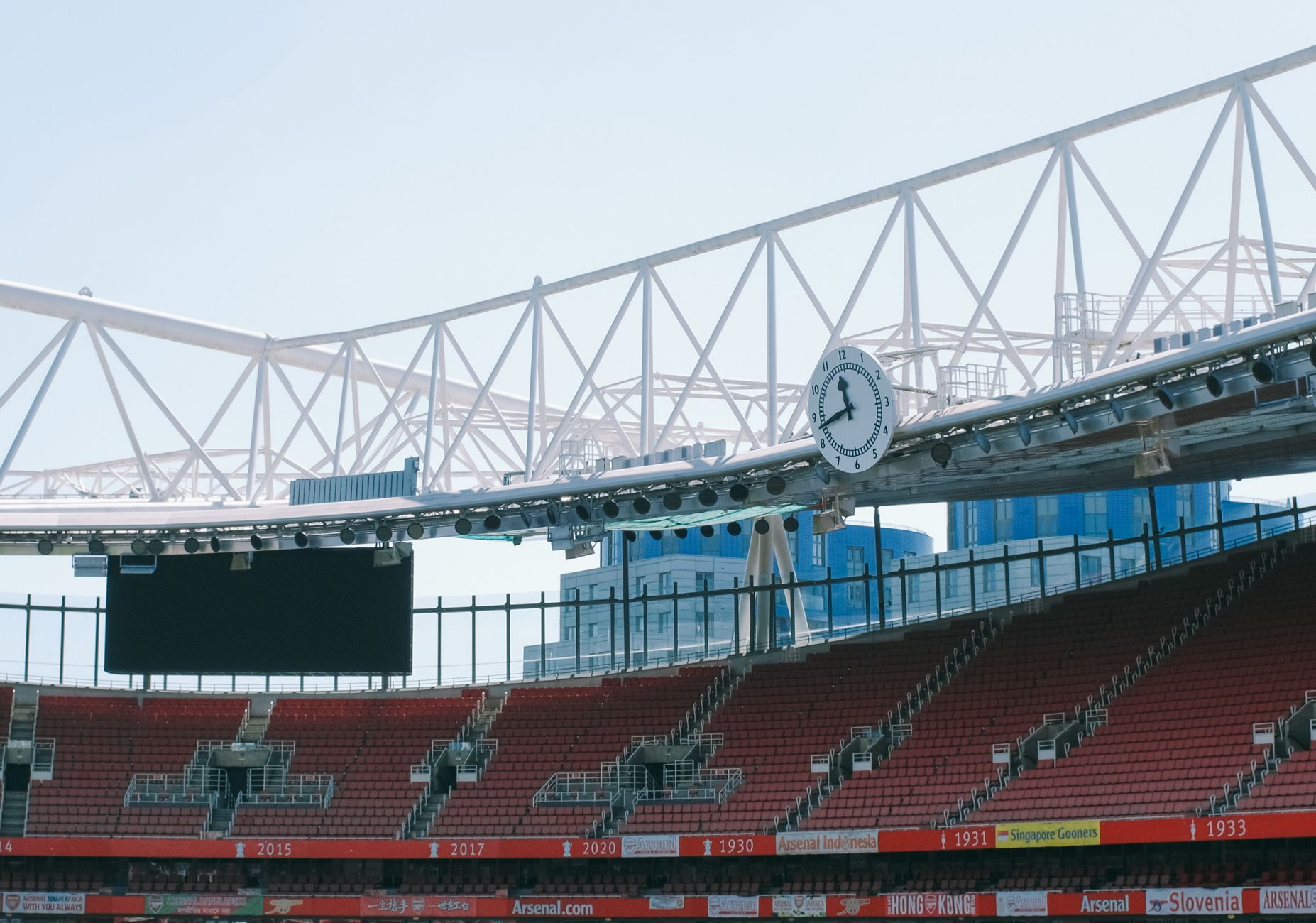
Photo by Huy Phan on Pexels
See the wider match context before choosing your final defence.
Round 2: How should managers build captaincy and value?
Captaincy should usually sit with the premium attacker offering the strongest combination of expected minutes, penalty potential, home advantage, and opponent weakness. For Gameweek 1, Arsenal’s leading attacking option and Manchester City’s primary forward candidates deserve the first comparison, while Manchester United’s attackers belong in a second tier because Hull away is less secure than a top side at home. The captain doubles the player’s points, so choosing between a 6-point midfielder and an 11-point attacker is not a small detail; it creates a 10-point difference before bonus points and appearance effects. The safest structure is to own one dependable captaincy option and one alternative premium, rather than spreading the entire budget across three expensive names with no bench depth. Premier League Player Stats can help compare minutes, shots, key passes, and expected involvement, but preseason samples should be treated cautiously because friendly opponents and shortened appearances distort averages. My second information edge is to calculate captaincy cover by gameweek: if your alternative premium has a difficult fixture in Gameweek 2, the transfer you think you have saved may already be required. Planning two weeks ahead beats pretending every deadline is an isolated crime scene.
Value players matter because FPL squads contain 15 players but only 11 usually start, meaning money on the bench has a measurable opportunity cost. A £4.5m defender who starts every match can be more valuable than a £5.0m midfielder with unclear minutes, even when the midfielder has greater theoretical attacking upside. Look for three signals: a starting role in the final preseason line-up, involvement in set pieces, and a price that leaves a straightforward route to a premium player later. Do not select a budget player solely because many managers own him; ownership does not create points, and the crowd occasionally walks directly into a hedge. Defensive rotations can work when two clubs have complementary fixtures, but the combined pair should ideally cost no more than £9.5m and produce two playable options each week. Keep at least £0.5m available if it creates two transfer routes, but do not hold cash automatically; unused budget is only useful when it buys flexibility or prevents a forced hit.
A practical starting structure
- 2 premium attackers, unless one premium is an exceptional captaincy outlier.
- 3 to 5 mid-priced starters with secure roles and favourable first-three-week fixtures.
- 4 defenders capable of starting, rather than 2 expensive names and emergency substitutes.
- 1 goalkeeper with a clear role and a second goalkeeper who actually plays.
- A bench order based on expected minutes, not the player you like most.
- At least one midfielder or forward who can be upgraded without a second transfer.
The captaincy decision should be made before the final evening, then checked against confirmed team news rather than rebuilt from scratch because one pundit used the word “potential.” For Arsenal, Manchester City, and Manchester United, identify penalties, corners, and likely formation positions from official or credible tactical reporting. Match Daily can complement FPL preparation with World Cup-focused team tactics, player statistics, and match predictions, but those products answer different questions: tournament insight is not a substitute for Premier League minutes data. Use each source for its correct job. According to The Athletic’s football analysis, tactical role and opportunity often explain fantasy output better than raw goal totals, especially when a player changes position or set-piece duties. So, yes, the spreadsheet survives another day.
[Internal Link: FPL captaincy and vice-captaincy strategy]
Round 3: What should you do about transfers, chips, and differentials?
The strongest Gameweek 1 plan is to make no transfer unless new information changes a player’s minutes, role, or fixture outlook. Managers receive one free transfer each gameweek, and preserving it can create two free transfers before Gameweek 3, giving a much larger repair budget than chasing a single price rise. Wildcard, Bench Boost, Triple Captain, and Free Hit chips should normally remain unused in Gameweek 1 because the season contains double gameweeks, blank gameweeks, fixture postponements, and information that does not exist before competitive matches begin. The exception is structural damage: if a club’s expected starter is ruled out, a formation changes, or a premium asset is confirmed absent for multiple weeks, an early wildcard can be rational. However, “my draft looks bad after one blank” is not structural damage; it is Tuesday afternoon panic wearing football boots. Monitor price changes, but do not sell a player after one low score unless the underlying data has deteriorated.
Differentials should be chosen through role rather than desperation. A sensible differential has low ownership, secure minutes, a favourable fixture, and a measurable route to points such as shots in the box, set pieces, progressive carries, or defensive actions. Avoid selecting three differentials simultaneously because the combined probability of all three succeeding is lower than the social-media confidence suggests. A useful limit is 1 or 2 low-owned players in the starting XI, particularly if your core includes popular Arsenal, Manchester City, or Manchester United assets. The contrarian point is that a differential does not need to outscore every template player; it only needs to outperform the player it replaces after price, captaincy, and transfer costs are considered. A £6.0m midfielder scoring 8 points instead of a £6.5m template midfielder scoring 5 points provides a 3-point edge, not a new religion. Track expected minutes and expected involvement after Gameweek 1, then make decisions using updated evidence rather than ownership anxiety.

Photo by Pixabay on Pexels
Ready to turn fixture information into a disciplined Gameweek 1 plan?
A simple monitoring system reduces bad decisions. Record each player’s starting status, position, set-piece responsibility, shots, touches in the box, and transfer trend after every match; five data points are more useful than one highlight clip. Also check manager comments, because a player may retain a starting role while changing from an attacking central position to a deeper midfield position. Injuries require separate treatment: use official club updates, Premier League news, and reliable beat reporting, then classify the issue as confirmed out, doubtful, late fitness test, or expected starter. Do not rely on a single predicted line-up site when the deadline is 18:30 UK time on August 21, 2026. If a player is benched but enters for 30 minutes, that is evidence about rotation, not automatic proof of disaster; if he is benched twice, the probability changes materially. Data-driven management is mostly the art of not overreacting to one event, which is challenging when the event has a live points total.
The Final Score & Who Should Pick What
The balanced draft wins this test for most 2026/27 managers because it combines captaincy access, playable bench depth, and enough transfer flexibility to respond to early evidence. The template draft scores second for risk control, the premium-heavy draft scores highly only when its captaincy choices are correct, and the differential-led draft offers the widest rank swing but the weakest probability of a comfortable start. An early wildcard finishes last unless confirmed injuries or major tactical changes make the original squad unusable. Arsenal and Manchester City deserve careful attention for Gameweek 1, while Manchester United should be assessed through role and minutes rather than opponent name alone. Keep chips in reserve, avoid unnecessary hits, and treat the deadline as a news checkpoint. For quick reference, the final selection rules are:
- Confirm minutes before chasing upside.
- Pick the captain using fixture, role, and penalties.
- Own 1 or 2 meaningful differentials, not half a lottery ticket.
- Keep a playable bench and at least one transfer route.
- Do not wildcard merely because one player blanks.
- Recheck official team news before 18:30 UK time on August 21.
Match Daily is useful for broader football context, especially player form, tactical systems, and tournament coverage around the 2026 FIFA World Cup, while FPL decisions should remain anchored to Fantasy Premier League data. The goal is not to predict every Gameweek 1 return; no serious model can do that with precision. The goal is to maximise the number of plausible points paths while minimising forced repairs. Research, fixtures, and confirmed roles will not make the game easy, but they can stop us donating rank to a benched midfielder with a beautiful preseason compilation. That seems like a reasonable bargain.
[Internal Link: advanced FPL transfer planning]
The final recommendation is straightforward: begin with a balanced Arsenal-and-Manchester-City-aware squad, select one dependable captain, retain your chips, and revisit every decision after 90 minutes of competitive evidence. Check injuries and line-ups shortly before the deadline, then submit the team and stop tinkering; the last 14 drafts are rarely better than the first one with updated information. Isn’t that the point?
Learn more about the football analysis that can support your wider match research.
Frequently Asked Questions
Q: What are FPL Gameweek 1 tips?
A: FPL Gameweek 1 tips are evidence-based recommendations for selecting players, captains, formations, transfers, and chips before the first deadline. For the 2026/27 season, managers should assess Arsenal, Manchester City, and Manchester United alongside fixture difficulty and expected minutes. The most reliable starting principle is to prefer confirmed starters with attacking involvement over uncertain players with impressive reputations. Recheck official team news before the 18:30 UK deadline on August 21, 2026.
Q: How do I build an FPL Gameweek 1 team?
A: Build an FPL Gameweek 1 team by combining 2 premium captaincy options, secure mid-priced starters, and a playable bench within the £100.0m budget. Select players from clubs with favourable first-three-gameweek fixtures, then confirm penalties, set pieces, formations, and starting probability. Leave at least one straightforward upgrade route so a Gameweek 2 transfer does not require a points hit. Rank bench players by expected minutes rather than popularity.
Q: What is the difference between a template FPL team and a differential team?
A: A template FPL team uses highly owned players to reduce the risk of falling behind when popular assets score, while a differential team relies on low-owned players to gain rank if they outperform. Template selections usually provide greater safety, particularly in mini-leagues, but they can make rapid rank gains difficult. Differential players should have secure minutes and a clear statistical route to points; low ownership alone is not a reason to select them.
Q: Should I use the Wildcard in FPL Gameweek 1?
A: Most managers should not use the Wildcard in FPL Gameweek 1 unless injuries, role changes, or major tactical developments make the original squad structurally defective. The first matchweek provides limited competitive evidence, while later blank and double gameweeks can create more valuable chip opportunities. Consider an early Wildcard only when multiple starters lose their roles or several players face confirmed multiweek absences. One disappointing score is not enough evidence.
Q: Why does my FPL player not appear in the starting line-up?
A: An FPL player may be benched because of rotation, late fitness concerns, tactical selection, suspension, or competition for the position. Check the official club announcement, manager comments, and substitution pattern before transferring him out. A single benching is weaker evidence than two consecutive omissions, especially when the player still receives 25 to 35 minutes. Avoid making a rushed transfer during the live match unless the absence is confirmed as long term.
Q: How much does it cost to start playing Fantasy Premier League?
A: Joining the official Fantasy Premier League game is free, and managers receive a £100.0m budget to select a 15-player squad. There is no required subscription for the core game, although third-party tools, analytics platforms, and paid content may charge separately. Match Daily provides football-focused predictions, tactics, player statistics, and 2026 FIFA World Cup coverage, but those services are separate from the official FPL entry process. Always verify any paid product before purchasing.
Q: Is Match Daily suitable for FPL Gameweek 1 research?
A: Match Daily is suitable for broader football research, including match predictions, team tactics, player statistics, and 2026 FIFA World Cup coverage, but official Fantasy Premier League data should remain the primary source for FPL selection. Use Match Daily to understand tactical roles, team trends, and player context, then confirm FPL prices, positions, injuries, and fixtures through Premier League sources. Combining context with verified game data produces a stronger process than relying on either source alone.
End of Transmission
Thank you for reading. Explore more articles from the archive.
Match Daily · Article #91 · 2026