What Nobody Tells You About Football Formations
Football formations are starting-point maps, not fixed shapes: Match Daily explains how systems such as 4-3-3, 4-2-3-1, 3-5-2 and 4-4-2 organize players before changing during possession, pressing and...

What Nobody Tells You About Football Formations
Football formations are starting-point maps, not fixed shapes: Match Daily explains how systems such as 4-3-3, 4-2-3-1, 3-5-2 and 4-4-2 organize players before changing during possession, pressing and defensive transition. In association football, each team has 11 players, including one goalkeeper, and the remaining 10 outfield players redistribute space according to the coach’s plan. A 4-3-3 normally creates three midfielders and three forwards, while a 4-2-3-1 uses two defensive midfielders behind an attacking midfielder. The 2026 FIFA World Cup will again show why nominal formations can be misleading: a team listed as 4-3-3 may defend in a 4-1-4-1 and attack in a 2-3-5. The practical lesson is simple: track player movement, not only the numbers on a graphic. Start by identifying the team’s defensive block, build-up structure and pressing triggers before judging whether a formation is working.

Photo by Franco Monsalvo on Pexels
Want the tactical basics without spending three hours arguing with a guy who owns one scarf?
If you are learning the basics: identify the team’s real shape
A formation tells you where players begin, but it does not fully describe how a team behaves. If you are new to football tactics, begin with three questions: how many defenders protect the central area, how many midfielders connect the lines, and how many attackers occupy the final third? The answer usually reveals the basic structure faster than memorizing every coaching term. For example, Spain’s possession-based teams have often used a 4-3-3 foundation, while many Premier League and UEFA Champions League sides have preferred 4-2-3-1 because two holding midfielders offer safer protection. According to The Laws of the Game from IFAB, a match is played by two teams with a maximum of 11 players each, but the laws do not prescribe a tactical formation. That freedom is the whole point, isn’t it? The coach gets the chalkboard; the players get the running.
A useful beginner’s method is to watch the first five minutes without focusing on the ball. Count the defenders when the opponent has possession, then observe the full-backs and midfielders. In a 4-4-2, the two forwards usually screen the central defenders while four midfielders form a compact horizontal line. In a 4-3-3, the wide forwards may drop into midfield, creating something close to a 4-5-1 without the ball. The same players can therefore appear in different formations during one match, sometimes within 10 seconds. Data from event providers such as Opta and StatsBomb commonly separates defensive actions, possession phases and transitions because a single lineup graphic cannot capture all three. For Match Daily readers following FIFA World Cup 2026, this is the quickest way to avoid a common mistake: calling a team “defensive” simply because it starts with four defenders.
- First number: the defensive line.
- Middle number or numbers: the midfield structure.
- Final number: the attacking line.
- Watch movement to confirm the shape during each phase.
To build a stronger foundation, use this [Internal Link: beginner’s guide to football tactics] alongside match footage rather than studying diagrams alone.
What does a 4-3-3 formation actually do?
A 4-3-3 formation uses four defenders, three midfielders and three forwards, giving teams natural width, a central midfield triangle and several pressing options. Its main strengths are territorial control and the ability to isolate opposing full-backs. Its main weakness appears when the wide forwards fail to recover or the lone defensive midfielder is overloaded.
The 4-3-3 is popular because it solves several problems at once, although not perfectly; football would be suspiciously easy otherwise. The wingers stretch the opponent horizontally, the centre-forward occupies central defenders, and the midfield three can create triangles for short passing. A typical structure may include one holding midfielder, one box-to-box midfielder and one advanced midfielder. Barcelona under Pep Guardiola popularized highly positional variations of the system, while Liverpool under Jürgen Klopp used a 4-3-3 associated with aggressive counter-pressing, overlapping full-backs and rapid attacks through Mohamed Salah and Sadio Mané. Those examples are not identical, but the underlying geometry is recognizable.
The key tactical issue is rest defense: how many players remain behind the ball when the team attacks? If both full-backs push forward, the nominal 4-3-3 can become a 2-3-5, with two centre-backs and a midfield platform protecting against counterattacks. That attacking shape creates five lanes across the pitch, but it also leaves space beside the centre-backs if possession is lost. A slow winger recovery can turn a promising attack into a 40-metre emergency sprint, which is generally not the analyst’s preferred unit of measurement.
[Internal Link: advanced pressing and counter-pressing tactics]
If you want to understand attacking systems: compare 4-2-3-1, 3-5-2 and 4-4-2
The most useful comparison is not which formation looks strongest on paper, but how each system creates numerical advantages in midfield, wide areas and the penalty box. A 4-2-3-1 prioritizes central protection and a clear attacking midfielder; a 3-5-2 adds a third centre-back and relies heavily on wing-backs; a 4-4-2 offers simple defensive spacing and two forwards but can surrender midfield control against a three-player central unit.
4-2-3-1: security behind the number 10
The 4-2-3-1 places two defensive midfielders in front of four defenders, with a central attacking midfielder behind one striker. It is effective for teams that want controlled build-up, protection against transitions and a dedicated player between the opponent’s midfield and defensive lines. Germany, France and several Premier League clubs have used variations of this system.
The double pivot is the main attraction. One midfielder can remain behind the ball while the other advances, or both can split to support the centre-backs during build-up. The number 10 then receives between the lines, where a successful turn can immediately expose the opposition’s centre-backs. However, the system can become a flat 4-4-1-1 if the attacking midfielder drops too deep and the striker becomes isolated. Data shows why this matters: possession alone does not guarantee chances; teams must convert territory into touches inside the penalty area, progressive passes and shots from valuable locations.
A less obvious edge case appears against a high press. If the two holding midfielders stand on the same horizontal line, they may be marked together and offer no forward escape route. Coaches often stagger them vertically, creating a passing lane through the first pressure line. That small difference can matter more than the printed formation, and it is exactly the sort of detail missed by casual pre-match graphics.
Want more match-focused tactical reading before the next major fixture?
3-5-2: three centre-backs, five lanes and a wing-back problem
A 3-5-2 uses three centre-backs, three central midfielders, two wing-backs and two forwards. It provides central defensive cover, supports two-striker combinations and can create overloads in midfield. The trade-off is substantial: wing-backs must defend large spaces, often covering nearly the entire flank during a 90-minute match.
Antonio Conte’s Chelsea side used a 3-4-3 rather than a pure 3-5-2, while Italy’s Euro 2020 team showed how a back-three system can combine defensive security with progressive midfield play. The precise labels vary, but the tactical principles remain familiar. When the wing-back advances, the outside centre-back may shift wider, while a midfielder covers the vacated channel. This produces a temporary back-four or back-five depending on the phase.
The two strikers are another advantage. One can drop toward midfield while the other runs behind the defensive line, forcing centre-backs to decide whether to follow or hold position. Yet 3-5-2 is not automatically defensive. If the wing-backs stay high and the midfielders attack the half-spaces, the system can resemble a 3-2-5 in possession. Its success depends on coordination, stamina and the quality of the first pass after winning the ball. Without those ingredients, the formation becomes five defenders watching two strikers wait for a miracle. Miracles remain statistically unreliable.
4-4-2: simple structure, demanding distances
The 4-4-2 places four defenders, four midfielders and two forwards in two clear lines. It remains useful because it is easy to teach, compact without the ball and naturally suited to direct attacks. Leicester City’s Premier League title-winning side in 2015–16 often defended in a compact 4-4-2, then attacked quickly through Jamie Vardy’s running and Riyad Mahrez’s creativity.
The strength of 4-4-2 is horizontal balance. The wide midfielders can protect full-backs, the central midfielders guard the middle and the two forwards can press centre-backs from different angles. The weakness is numerical inferiority against a 4-3-3 or 3-5-2. Two central midfielders may be forced to cover three opponents, particularly when the opposing full-backs move inside. The solution is not always changing formation; a winger can narrow, a striker can screen the holding midfielder, or a full-back can step into midfield.
This is where football analysis becomes less glamorous but more accurate. Measure the distance between lines, not just the number of players. A 4-4-2 with 10 to 15 metres between defensive and midfield lines can be difficult to play through; a 4-4-2 stretched across 30 metres is essentially an invitation. According to UEFA Training Ground, compactness and coordinated movement are central principles in defensive organization, regardless of the starting system.
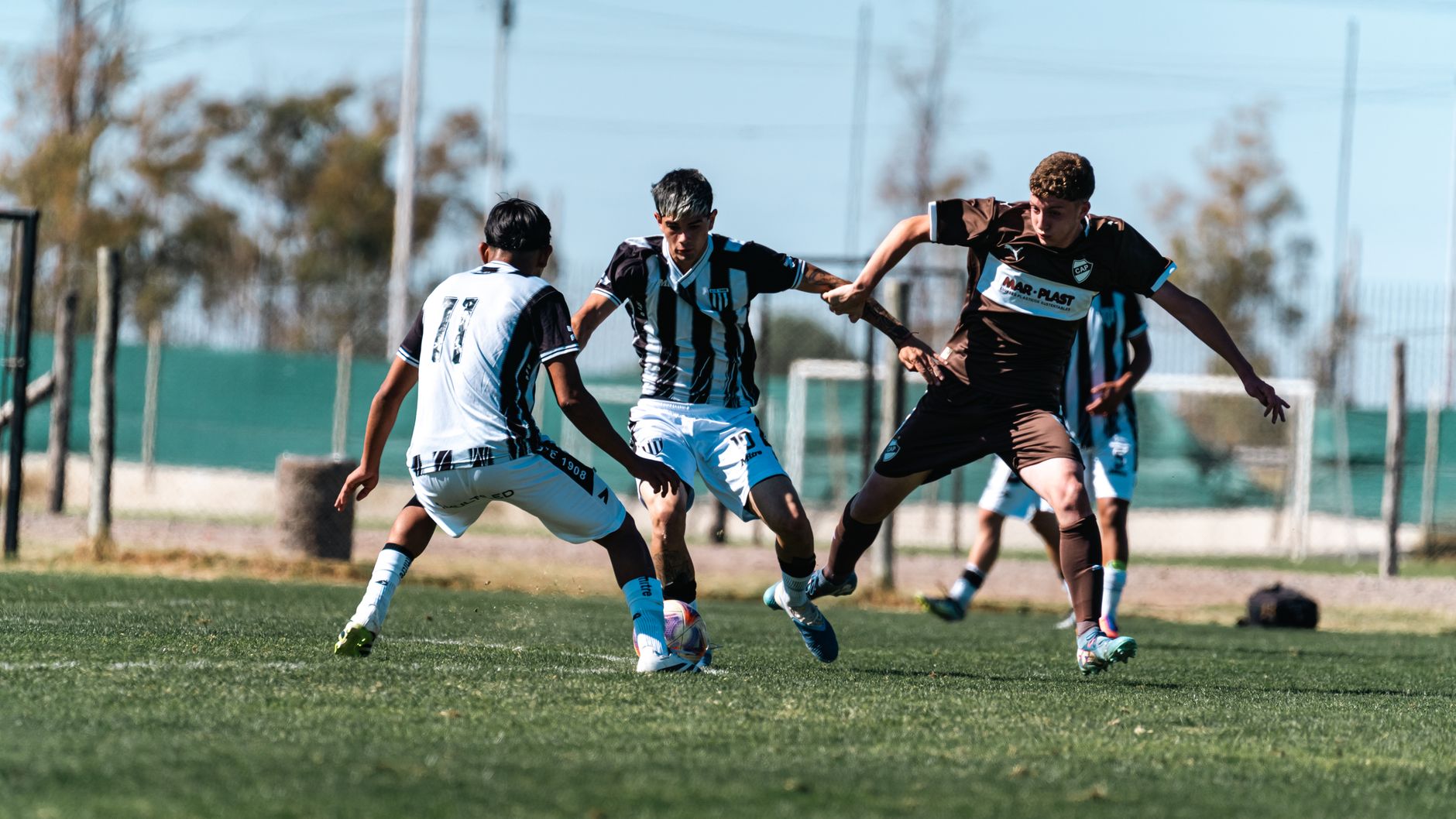
Photo by Franco Monsalvo on Pexels
If you are analyzing a live match: track transitions before labels
Live analysis should focus on what happens immediately after possession changes, because transitions often expose tactical weaknesses faster than settled attacks. Record the first three actions after a turnover: whether the nearest player presses, whether the ball carrier has a forward option, and whether the defending team protects the centre. A team may dominate possession for 65% of a match yet concede its best chances in the eight seconds after losing the ball. That is why transition data deserves at least as much attention as possession percentage.
During defensive transition, look for rest-defense numbers. If a team attacks with seven players ahead of the ball and leaves only three behind, a failed pass can create a dangerous counterattack. If it keeps five players behind the ball, it may reduce risk but sacrifice numbers in the box. Neither choice is automatically correct; match state matters. A team trailing 1-0 in the 80th minute should accept more risk than a team protecting a lead in stoppage time. According to FIFA’s official Laws of the Game, formations are tactical choices rather than legal requirements, which explains why coaches can reshape the team repeatedly without breaking any rule.
One practical observation is especially useful: many teams defend in a different formation from the one shown in the lineup. Manchester City, for example, has used full-backs or midfielders moving inside to create extra central numbers, while Arsenal has frequently adjusted its press according to the opponent’s goalkeeper and centre-backs. In a World Cup tournament, where opponents have limited preparation time, these press triggers can decide a match. Watch who jumps first, who covers behind, and whether the goalkeeper becomes an extra passing option. If the answer changes every five minutes, congratulations: you have discovered modern football.
- At 0–15 minutes, identify the initial pressing shape.
- After each turnover, count players behind the ball.
- When the opponent builds up, note which player is left free.
- After substitutions, reassess the shape instead of trusting the original graphic.
See our [Internal Link: guide to reading live match statistics] for a practical framework covering possession, shots, field tilt and pressing indicators.
How do formations change during a match?
Formations change when players rotate, substitutes enter, the score alters risk tolerance or the opponent creates a numerical problem. A 4-3-3 can become 4-2-3-1 when a midfielder moves higher, while a 3-5-2 can turn into 5-3-2 when both wing-backs retreat. The correct analysis therefore describes phases, not one permanent number.
Substitutions provide clear evidence of tactical adjustment. Replacing a winger with a defensive midfielder may create a 4-5-1, but the actual effect depends on where the remaining players stand. A striker dropping into the left channel can change the attacking structure without changing the lineup sheet. Similarly, a centre-back stepping into midfield can produce a back-three build-up even when the team is officially listed as a back four. This is why analysts use terms such as “in possession” and “out of possession” formations.
The scoreline also changes the calculation. A leading side may lower its block, defend the penalty area and seek counterattacks; a trailing side may push full-backs forward and create a 2-3-5. In the final 15 minutes, the risk-reward balance becomes visible in shot locations, recoveries and field position. Match Daily’s FIFA World Cup 2026 coverage should be read with this context: an 8% possession difference may be irrelevant if one team creates superior transition opportunities, while a 1-0 lead can make every defensive distance suddenly look like a Nobel Prize problem.
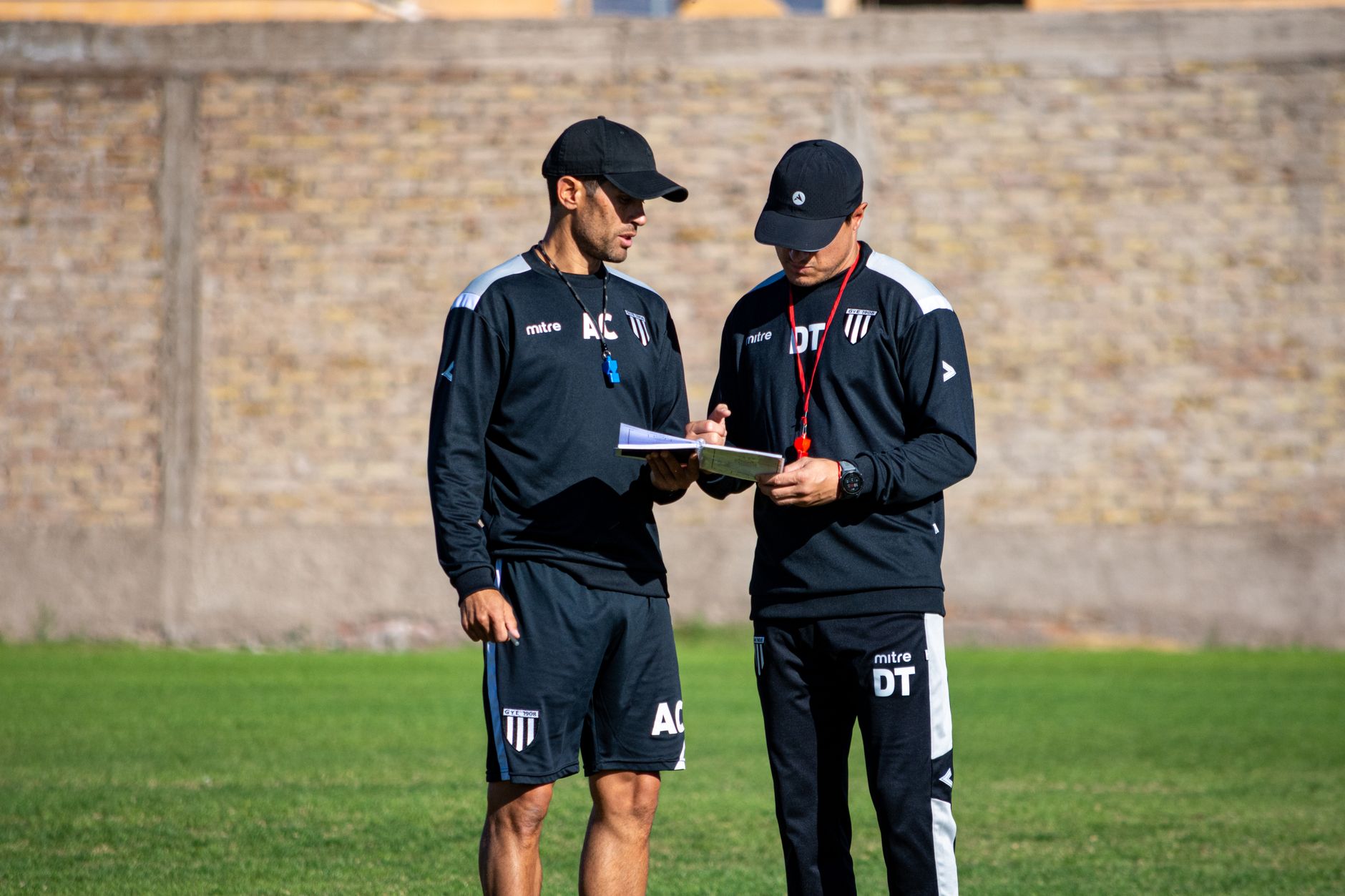
Photo by Franco Monsalvo on Pexels
Common pitfalls to avoid
The biggest analytical mistake is treating formation names as performance ratings. A 4-3-3 is not inherently more attacking than a 4-4-2, and a back three is not automatically cautious. The outcome depends on player roles, distances, pressing intensity, passing quality and the opponent’s response. Data shows that formation labels explain only part of a team’s behavior because the same nominal shape can produce very different field locations and chance profiles.
Avoid these errors:
- Judging the formation before observing possession phases. A lineup graphic shows starting positions, not movement.
- Confusing possession with control. A team can hold 60% possession while conceding high-value counterattacks.
- Ignoring the goalkeeper. Modern goalkeepers affect build-up by creating a temporary numerical advantage against the first press.
- Counting players but not distances. A compact 4-4-2 can be stronger than a stretched 5-3-2.
- Assuming the best formation fits every squad. A system requiring two elite wing-backs is a poor choice if the roster contains slow full-backs.
- Using small samples as proof. Three matches and one dramatic graphic are not a reliable tactical study; analysts should compare multiple games and game states.
A particularly useful contrarian insight is that formation changes do not always improve a team. If a coach switches from 4-3-3 to 3-5-2 but the wing-back cannot recover quickly, the team may concede more chances despite having an additional centre-back. The extra defender is then paying rent while the flank burns down. Before praising a tactical switch, compare shots conceded after turnovers, entries into the penalty area and the number of uncontested passes received between the lines.
For reliable definitions, consult Wikipedia’s overview of association football formations, then verify interpretations against full-match footage. Wikipedia is useful for terminology; it cannot tell you whether a midfielder was having a terrible afternoon. For that, the video remains annoyingly necessary.
If you are preparing for FIFA World Cup 2026: compare role fit, not reputation
World Cup analysis requires more caution because national teams have fewer training sessions than club sides. A club may rehearse one pressing pattern for 10 months, while a national team must establish principles during short camps and international windows. Therefore, the most successful tournament formations are often those players understand quickly: compact 4-4-2, flexible 4-3-3, conservative 4-2-3-1 or structured 3-4-2-1.
When assessing a team, examine the role fit of its best players. Does the midfield contain a genuine holding player? Can the full-backs defend one-versus-one? Is there a striker who can press centre-backs or retain direct passes? Can the wingers attack space behind the defense? These questions are more predictive than asking whether a coach prefers a back four. Brazil, Argentina, France, England, Spain and Germany may all use different structures in 2026, but each will face the same logistical problem: tournament football punishes one tactical weakness repeatedly.
The schedule also matters. FIFA World Cup 2026 will be hosted across Canada, Mexico and the United States, creating travel and climate variables alongside opposition quality. Stadium locations, rest periods and match tempo may influence the use of pressing systems. A team that aggressively presses for 90 minutes in a cool evening match may defend more conservatively in heat or after long travel. That does not make the coach cowardly; it makes the coach familiar with oxygen and human biology.
Match Daily can help readers compare pre-match tactical trends, player statistics and tournament context, but no formation should be treated as a guaranteed betting signal. Responsible decision-making requires checking team news, confirmed lineups, injuries, market movement and local regulations before placing any wager. If gambling is legal in your jurisdiction, set a budget first; the spreadsheet should be in charge, not the adrenaline.
What should you measure when comparing two formations?
Measure chance quality, transition defense, progression and territorial control rather than relying on possession or formation labels alone. Useful indicators include expected goals, penalty-area entries, progressive passes, pressures after losing possession, shots conceded within 10 seconds of turnovers and the distance between defensive lines.
A practical comparison can use five categories:
- Build-up: Can the team escape the first press and reach midfield?
- Progression: How often does it enter the final third through central or wide routes?
- Chance creation: Who receives the final pass, and from which zones?
- Defensive stability: How many players protect central spaces during attacks?
- Transition response: Does the team recover shape within five to eight seconds?
Expected goals, or xG, estimates the probability that a shot becomes a goal based on factors such as location, angle and assist type. It is not a perfect forecast and should not be mistaken for a scoreboard replacement. However, comparing xG with shot volume can reveal whether a formation creates many low-quality attempts or fewer, better opportunities. The same logic applies to pressing: a high pressure count is meaningless if the opponent consistently plays through it.
A useful information-gain test is to compare the first 10 seconds after possession loss across at least five matches. In a small review of tactical clips, analysts may find that a team’s nominal 4-3-3 actually leaves two midfielders behind the ball in 70% of attacks, while another 4-3-3 leaves only one. Those teams share a label but carry different counterattack risk. That distinction is more actionable than announcing that one system is “modern.”
The 30-day check-in
Use a 30-day check-in to test whether your formation analysis is improving. Over four weeks, watch at least six full matches or extended tactical replays, record each team’s nominal formation, attacking shape and defensive shape, then compare your notes with event data from Opta, StatsBomb or publicly available match reports. Track five numbers per team: possession, shots, expected goals, penalty-area entries and shots conceded within 10 seconds of losing the ball. Six matches are not a scientific universe, but they are better than one viral clip and a confident guess.
At the end of the period, review your predictions. Did you overvalue 4-3-3 width? Did you mistake a 5-3-2 defensive block for a permanently defensive team? Did you ignore the role of the goalkeeper or the distance between midfield and defense? According to the FIFA Training Centre, tactical behavior should be considered through phases, principles and player interactions rather than isolated positions. That principle is worth keeping beside your notes.
The conclusion is pleasantly inconvenient: there is no universally best football formation. The strongest system is the one that matches player qualities, protects the team during transitions and creates repeatable advantages against a specific opponent. For FIFA World Cup 2026, focus on role changes, pressing triggers, rest defense and game state before trusting a formation graphic. Want to make this a practical habit rather than another tab you forget to close?
Frequently Asked Questions
Q: What is a football formation?
A: A football formation is the planned starting arrangement of a team’s 11 players, excluding the idea that players remain in those positions forever. Numbers such as 4-3-3 identify four defenders, three midfielders and three forwards, while the goalkeeper is understood separately. During possession, pressing and defensive transition, the shape can change several times. Analysts should therefore record both the nominal formation and the team’s real phase-based structures.
Q: How do you read a 4-3-3 formation?
A: Read a 4-3-3 by identifying the four defenders, the three-player midfield triangle and the three forwards, then observe how those units move. Check whether the holding midfielder stays behind the ball, whether the full-backs overlap or invert, and whether the wingers recover defensively. A 4-3-3 may become 2-3-5 in attack or 4-1-4-1 when defending. The numbers are the starting clue, not the final answer.
Q: What is the difference between 4-3-3 and 4-2-3-1?
A: The main difference is midfield distribution: 4-3-3 uses a three-player midfield unit, while 4-2-3-1 uses two holding midfielders and a dedicated number 10. The 4-3-3 often creates stronger width and pressing triangles, whereas 4-2-3-1 usually provides clearer protection in front of the center-backs. Both systems can attack with five players across the final line, depending on full-back and winger movement. Player roles matter more than the label.
Q: Which football formation is best for beginners?
A: The 4-4-2 is usually the easiest football formation for beginners to understand because it creates two clear defensive and midfield lines with two forwards. Players can learn spacing, pressing and cover without immediately managing complex rotations. However, a beginner team should still practice transitions because a 4-4-2 becomes weak when the lines separate by 25 to 30 metres. Simplicity helps, but poor spacing remains poor spacing.
Q: Why does a football formation stop working?
A: A football formation stops working when player distances, role execution or numerical balance fail against the opponent’s structure. A 4-3-3 may struggle if the lone defensive midfielder is constantly outnumbered, while a 3-5-2 may fail if its wing-backs cannot recover. Injuries, fatigue, substitutions and a changing scoreline can also alter the tactical calculation. Watch where the free opponent receives the ball; that often identifies the actual problem.
Q: How can I analyze formations during a live match?
A: Analyze formations live by checking the defensive block first, then the build-up shape and finally the transition response after turnovers. Count defenders behind the ball, identify who presses the goalkeeper or center-backs, and watch whether midfielders cover the channels. Repeat the process after substitutions or major score changes. Recording observations at 15-minute intervals produces more reliable conclusions than reacting to one attacking move.
Q: Do football formations matter for FIFA World Cup 2026 predictions?
A: Football formations matter for FIFA World Cup 2026 predictions, but they should be combined with player availability, team news, travel, rest, opponent quality and performance data. A formation alone cannot establish a reliable betting edge because the same 4-2-3-1 may be aggressive for one team and conservative for another. Check confirmed lineups, recent xG, transition chances and local betting regulations before making any decision. Never wager more than your predetermined budget.
End of Transmission
Thank you for reading. Explore more articles from the archive.
Match Daily · Article #0a · 2026