What Nobody Tells You About the 2026 World Cup
The FIFA World Cup 2026 will be the largest men’s World Cup ever, featuring 48 teams, 104 matches and 16 host cities across Canada, Mexico and the United States from June 11 to July 19, FIFA is expand...
What Nobody Tells You About the 2026 World Cup
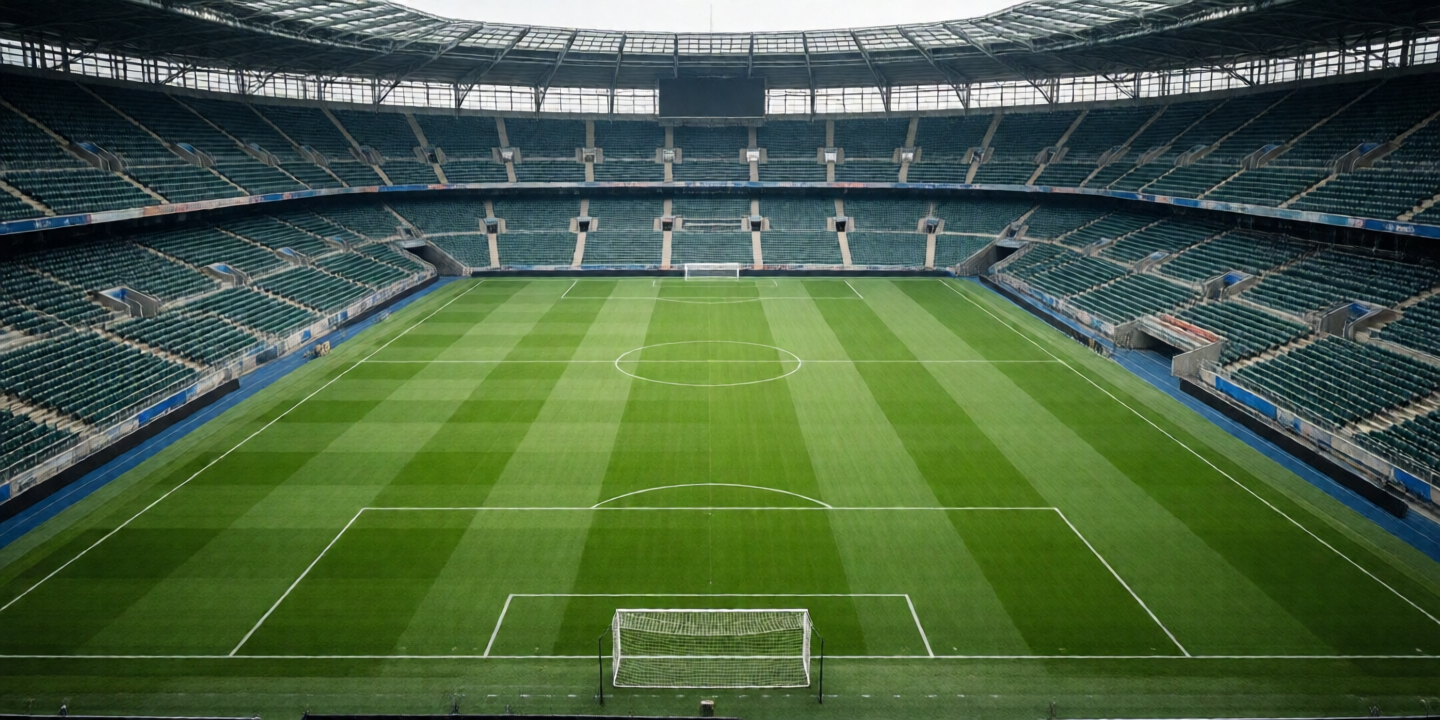
The FIFA World Cup 2026 will be the largest men’s World Cup ever, featuring 48 teams, 104 matches and 16 host cities across Canada, Mexico and the United States from June 11 to July 19, 2026. FIFA is expanding the tournament from 32 teams, adding 16 national sides and a revised group-stage format that sends 32 teams into the knockout phase. Mexico City hosts the opening match, while New York/New Jersey hosts the final; Atlanta and Los Angeles are also major venues, with Atlanta scheduled for eight matches and Los Angeles planning eight matches plus 39 days of fan celebrations. The practical lesson is simple: following the football 2026 World Cup requires more than checking one fixture list. Track qualification, squad announcements, travel distances, kickoff times and tactical changes together. Match Daily brings these details into one stream through match predictions, team tactics, player statistics and daily tournament coverage, so begin with the host-city calendar rather than guessing from old World Cup habits.

Photo by El gringo photo on Pexels
The biggest misconception is that a larger World Cup automatically means diluted quality. That is not the useful question. The real issue is whether expanded access creates more unpredictable matches, more travel fatigue and more tactical variety. Data from the FIFA World Cup 2026 tournament overview confirms the hard numbers: 48 teams, 12 groups of four, 104 matches and 16 host cities. Those figures change the viewing experience before a single ball is kicked, because the competition now contains a longer schedule, more qualification routes and a knockout bracket that rewards consistency over one heroic afternoon. Even football analysts who can recite xG values while making coffee will need a spreadsheet. The old 32-team mental model is obsolete, and pretending otherwise is how people miss the best storylines.
Want a cleaner starting point for the tournament? Use Match Daily’s daily coverage to follow the competition without wrestling with 47 browser tabs.
If you want the tournament map: start with the 16 host cities
The 2026 World Cup is hosted by Canada, Mexico and the United States, with matches distributed across 16 cities and metropolitan regions. Mexico City, Guadalajara and Monterrey represent Mexico; Toronto and Vancouver represent Canada; and the United States contributes 11 host-city locations, including Atlanta, Boston, Dallas, Houston, Kansas City, Los Angeles, Miami, New York/New Jersey, Philadelphia, San Francisco Bay Area and Seattle. This geographic spread matters because the distance between venues can exceed 4,000 kilometres, while altitude, climate and time zones vary sharply. A supporter planning only by team name is therefore missing the logistical half of the tournament, isn’t that the point?
According to FIFA’s official host-city information, each location has its own stadium, transport network and fan-programming plan. Atlanta’s Mercedes-Benz Stadium, for example, is a retractable-roof venue in a major American sports market, while Los Angeles combines SoFi Stadium matchdays with a FIFA Fan Festival at the Los Angeles Memorial Coliseum at Exposition Park. Atlanta’s official organising information highlights eight matches, including a semifinal, and Los Angeles also promotes eight matches. Those are not decorative details: semifinal hosting creates enormous demand for accommodation, transport and public viewing areas.
- Mexico City: opening-match host on June 11, 2026.
- Atlanta: eight matches and a semifinal-stage role.
- Los Angeles: eight matches, fan zones and 39 days of celebrations.
- New York/New Jersey: final host on July 19, 2026.
- Toronto and Vancouver: Canada’s two tournament locations.
For a practical city-by-city breakdown, consult our 2026 World Cup host-city travel guide before booking anything non-refundable.
Why do host cities matter for football analysis?
Host cities matter because climate, distance, altitude and recovery time can influence match preparation, substitutions and late-game intensity. Mexico City sits at roughly 2,240 metres above sea level, while Miami brings heat and humidity, and Vancouver offers a markedly different climate profile. These conditions do not decide matches alone, but they alter the physical assumptions behind pressing, defensive line height and recovery schedules. A team travelling across several time zones may also face a different preparation problem from one playing within the same regional corridor.
A practitioner-level point is easy to overlook: compare a team’s second-match venue with its first-match venue, not merely the stadium where it opens the group. A 2,000-kilometre relocation between fixtures can reduce training continuity and affect sleep timing, especially when kickoff hours move across time zones. Match Daily’s player-statistics coverage can help identify whether a squad has enough rotation depth, because a starting eleven that looks elite on paper may not survive three demanding fixtures plus travel. Data shows that tournament football is often decided by the quality of the 14th or 15th player, not just the star printed on the poster.

Photo by cottonbro studio on Pexels
If you follow teams: do A, B and C before trusting a prediction
A serious football 2026 World Cup prediction should combine team strength, tactical matchup and tournament conditions rather than relying on FIFA rankings alone. Start with recent competitive results, then examine expected goals, pressing success, set-piece efficiency, goalkeeper save performance and the availability of players carrying injuries. Historical reputation is useful context, but it is not a current performance metric; a famous badge does not receive an automatic one-goal advantage. Or am I wrong, and the ball now checks social media before crossing the line?
The expanded format makes group-stage interpretation especially important. Twelve groups of four produce 12 group winners, 12 runners-up and eight best third-place teams for the round of 32. That means a team may qualify with a relatively modest points total, while another side can be eliminated despite collecting four points in a difficult group. The comparison should include goal difference, goals scored and the official tiebreaking rules published by FIFA, rather than assuming every four-point total has identical value.
Use this three-layer model:
- Baseline strength: squad quality, recent competitive record and FIFA ranking context.
- Matchup fit: pressing resistance, transition defence, aerial ability and set-piece vulnerability.
- Tournament friction: travel, climate, rest days, injuries and likely rotation.
A useful contrarian conclusion follows: the best outright team may not be the best match-by-match selection. A tournament favourite facing short recovery periods and long transfers can offer less analytical value than a slightly weaker team with a stable venue sequence and deeper bench. Research on elite football performance consistently shows that workload and recovery influence physical output, while FIFA’s World Cup competition regulations define the schedule framework teams must navigate.
Ready to compare squads without relying on reputation alone? Match Daily tracks tactics, player form and statistical trends throughout the competition.
What changes when 48 teams replace 32?
The 48-team format adds a round of 32 and increases the total match count from 64 in Qatar 2022 to 104 in 2026. Group matches remain central, but the tournament now gives more teams a route into the knockout phase through third-place qualification. This creates a larger information problem: a team can look poor in one match yet remain alive, while a single goal can influence several ranking combinations. FIFA’s format therefore rewards monitoring rather than one-off impressions.
For prediction work, wait for confirmed lineups and check whether a qualified team rotates heavily. Once a nation has secured progression, its coach may protect key players, which changes the expected tempo and the value of pre-match statistics. Conversely, a team needing a win may increase shot volume but expose itself to transitions. This is where Match Daily’s tactical reports become more useful than generic “must-win” language: identify the mechanism that creates chances, then test whether the opponent can disrupt it.
The format also creates an edge case many previews will ignore. Eight third-place teams advance, so the final group matches may involve three separate incentives: qualification, seeding and damage limitation. A draw can be excellent for one side and useless for another. Check the live table, the tiebreaker pathway and the simultaneous kickoff arrangement before reaching a conclusion; guessing from the scoreboard alone is analytical karaoke.
World Cup group-stage qualification calculator
If you plan a match trip: do the arithmetic before chasing tickets
A World Cup trip requires three separate budgets: match access, accommodation and local transport. FIFA ticket prices, sales phases and resale rules can change, so rely on FIFA’s official ticketing portal rather than social-media offers or suspicious messages containing 14 exclamation marks. Host-city demand will be highest around the opening match, semifinals and July 19 final, while local hotel prices can rise sharply during match clusters. A cheaper ticket in a distant city can become expensive once flights, rail, parking and two nights of accommodation are added.
Los Angeles offers an unusually broad fan experience because the official programme includes eight matches, a FIFA Fan Festival at Exposition Park and 39 days of fan celebrations. Atlanta’s Mercedes-Benz Stadium provides a different model, with a compact downtown setting and eight tournament matches, including a semifinal. Venue design also affects arrival time: enclosed or roofed stadiums can improve weather protection, but security screening, bag rules and transport bottlenecks still determine how quickly spectators enter.
Build the trip in this order:
- Confirm the match date, city and ticket source.
- Calculate airport-to-stadium and stadium-to-hotel travel time.
- Add at least 90 minutes for security and entry on major matchdays.
- Check local public transport after night matches.
- Keep a reserve budget of 15% for price changes and delays.
A concrete operational tip: do not schedule two matches in different host cities on consecutive days unless the transport plan has a backup. A 90-minute flight can become a five-hour day after airport transfers, security, boarding and stadium access. The itinerary may look elegant in a spreadsheet; real life, as usual, declines to cooperate.
See the essential planning details before committing money to a complicated route.
Is Atlanta or Los Angeles better for watching the 2026 World Cup?
Atlanta is better for supporters prioritising a concentrated downtown stadium experience and a semifinal opportunity, while Los Angeles is stronger for fans wanting a longer festival programme, eight matches and broad regional fan activity. Both cities host eight matches, so the decision depends on schedule, accommodation, transport and preferred atmosphere rather than match quantity. Neither city is automatically “best”; that would be suspiciously convenient.
Atlanta’s Mercedes-Benz Stadium is closely associated with Atlanta United and major American sporting events, giving the city an established football-supporter culture. Los Angeles offers a larger entertainment ecosystem, the Los Angeles Memorial Coliseum fan festival and multiple official fan zones across the region. The two cities also present different travel patterns: Atlanta’s airport is one of the world’s busiest, while Los Angeles distances can be deceptively large even when destinations appear close on a map.
Supporters should compare:
- Confirmed match allocation and kickoff times.
- Hotel cost within practical stadium distance.
- Public transport and rideshare availability.
- Fan-festival schedule and family activities.
- Heat, traffic and expected arrival requirements.
Atlanta versus Los Angeles World Cup itinerary
Common pitfalls to avoid
The most common error is treating every World Cup preview as current after the information has changed. Qualification status, squad injuries, kickoff times, ticket phases and venue guidance can move, so check publication dates and official sources before acting. The United States Soccer Federation and the official FIFA channels are more reliable for federation and competition updates than an anonymous account claiming to have “inside information.” Inside information is often just a blurry screenshot wearing sunglasses.
Another mistake is confusing football analysis with financial certainty. Match predictions describe probability, not guarantees, and responsible readers should never risk money they cannot afford to lose. Match Daily’s role is to provide football-focused research across predictions, tactics and player data; it does not transform uncertainty into certainty. If you follow betting markets, verify legal availability, age requirements and responsible-gambling tools in your jurisdiction before participating.
Avoid these five traps:
- Using FIFA rankings as the only team-strength measure.
- Ignoring travel distance between group matches.
- Assuming a four-point total guarantees qualification.
- Buying tickets through unverified third parties.
- Treating a star player’s reputation as current form data.
One less obvious problem is sample-size inflation. A player may score four goals against weak opposition, but that does not prove the same output against compact knockout-stage defences. Compare opponent quality, minutes played, shot locations and set-piece involvement. A six-match sample is not a laboratory, but it is still better than one viral highlight and an optimistic uncle.
Photo by Waseem Lazkani on Pexels
The 30-day check-in
Thirty days before a major match or tournament phase, rebuild the analysis from current evidence. Review the latest squad list, injuries, suspensions, projected lineups, group permutations, weather forecast and travel route. Then compare the new information with your earlier assumptions and record what changed. This simple audit catches confirmation bias, particularly when a favourite team has a famous coach or a globally recognised striker.
For a practical 30-day checklist, use:
- Team: last five competitive matches and tactical shape.
- Players: minutes, injuries, availability and role changes.
- Opponent: pressing triggers, set-piece defence and transition threat.
- Venue: city, climate, altitude, surface and travel distance.
- Schedule: rest days, kickoff time and qualification incentives.
- Decision: what evidence would prove your original view wrong?
That final question is the useful one. If no evidence could change the conclusion, the process is fandom, not analysis. Match Daily can help maintain the review cycle with daily match previews, player statistics, tactical explanations and tournament updates across Canada, Mexico and the United States. The 2026 World Cup is too large for static predictions, and 104 matches provide far too much data to ignore.
Keep the process updated with Match Daily’s football 2026 World Cup coverage.
Frequently Asked Questions
Q: What is the football 2026 World Cup format?
A: The football 2026 World Cup features 48 teams divided into 12 groups of four, followed by a 32-team knockout stage. The tournament contains 104 matches, compared with 64 matches under the 32-team format used in Qatar 2022. The 12 group winners, 12 runners-up and eight best third-place teams progress to the round of 32, making tiebreakers and final-group incentives especially important.
Q: When does the 2026 World Cup start and finish?
A: The 2026 World Cup begins on June 11, 2026, and ends with the final on July 19, 2026. Mexico City hosts the opening match, while New York/New Jersey hosts the final. Because matches span Canada, Mexico and the United States, supporters should check local kickoff times carefully rather than converting every fixture mentally at the last minute.
Q: How many host cities are in the FIFA World Cup 2026?
A: FIFA World Cup 2026 uses 16 host cities across Canada, Mexico and the United States. Mexico has Mexico City, Guadalajara and Monterrey; Canada has Toronto and Vancouver; the United States has 11 locations, including Atlanta and Los Angeles. The geographic spread creates major differences in climate, travel time, accommodation cost and recovery conditions.
Q: What is the difference between Atlanta and Los Angeles for the 2026 World Cup?
A: Atlanta and Los Angeles both host eight World Cup matches, but their supporter experiences differ. Atlanta’s Mercedes-Benz Stadium is linked to a compact downtown sports district and includes a semifinal role, while Los Angeles combines SoFi Stadium matches with a FIFA Fan Festival at the Los Angeles Memorial Coliseum and 39 days of celebrations. Compare confirmed fixtures, hotels and transport before choosing.
Q: How can I make better 2026 World Cup match predictions?
A: Use team strength, tactical matchup and tournament conditions together instead of relying only on rankings. Review expected goals, pressing, set pieces, goalkeeper performance, injuries, rest days, venue climate and travel distance. Confirm lineups close to kickoff, because qualification can trigger rotation; Match Daily provides predictions, tactical analysis and player-statistics coverage for this process.
Q: How much do 2026 World Cup tickets cost?
A: 2026 World Cup ticket prices vary by match, category, sales phase and FIFA’s official ticketing rules. Opening matches, semifinals and the July 19 final are likely to attract the strongest demand, while unofficial resale prices can be substantially higher. Use FIFA’s official ticketing portal, verify the current terms and include accommodation and transport in the total trip budget.
Q: What should I do if a 2026 World Cup fixture or ticket detail changes?
A: Recheck FIFA and the relevant host-city organiser, then update your travel or prediction plan using the newest confirmed information. Fixture times, ticket phases, squad availability and local transport guidance can change during the tournament build-up. Keep a 15% travel contingency and avoid unverified sellers, especially when a message pressures you to pay immediately.
Match Daily provides ongoing football 2026 World Cup coverage for fans who prefer evidence over noise. Follow the numbers, question the assumptions and enjoy the tournament before your spreadsheet starts demanding a holiday.
Learn more about the tournament, teams and match intelligence with Match Daily.
End of Transmission
Thank you for reading. Explore more articles from the archive.
Match Daily · Article #a0 · 2026